Richard Hoffmann

Computing + Mathematical Sciences Junior at Caltech.

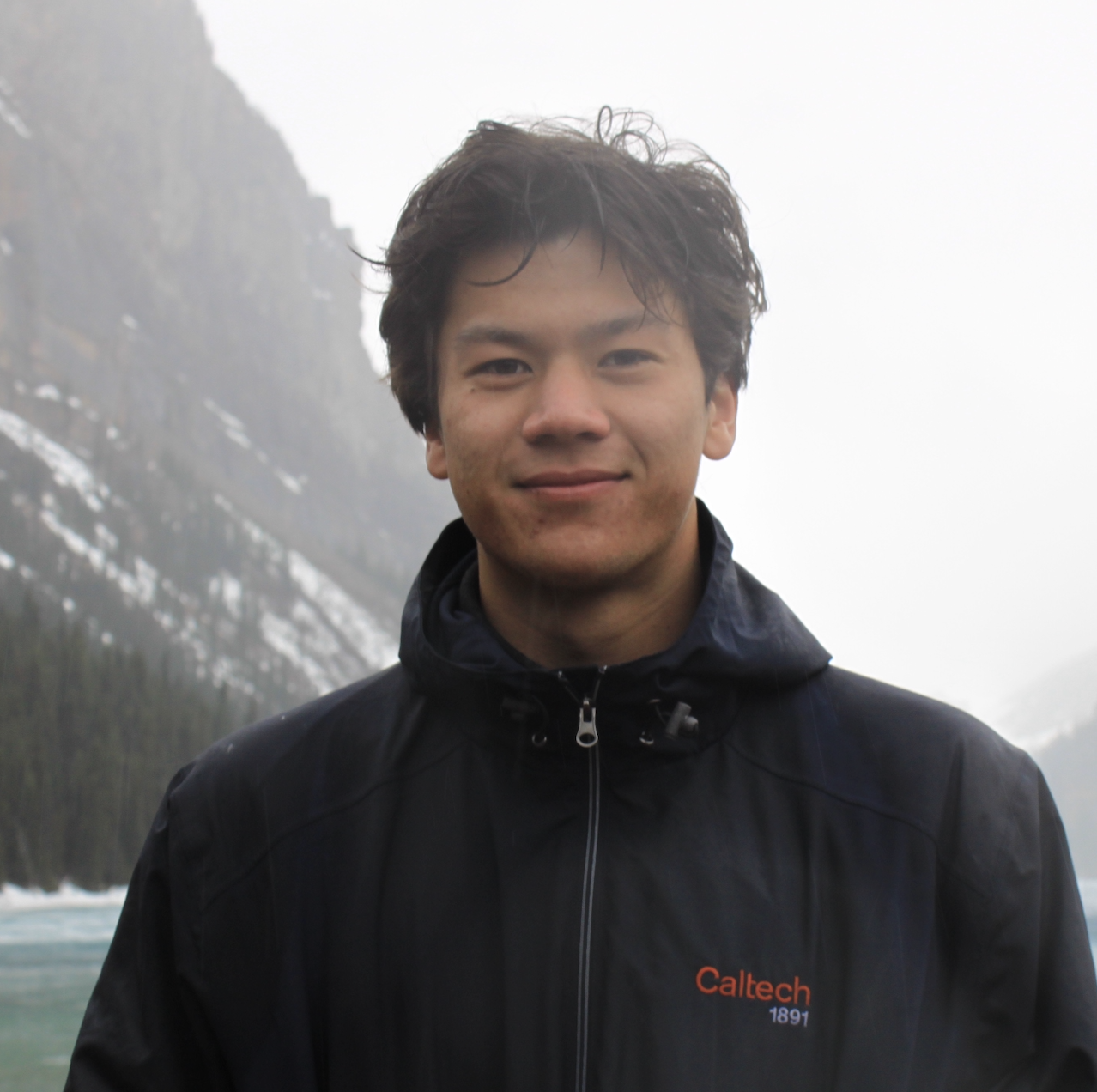
prof_pic.jpg
rhoffman@caltech.edu

Hey! I’m Richard, a third-year undergrad at Caltech studying Computer Science and minoring in Control & Dynamical Systems. I’m fortunate to be advised by Prof. Adam Wierman.

Humans learn quickly, reason abstractly, adapt to new environments, and coordinate with others. Broadly, my goal is to design embodied AI systems that can do the same. My research sits at the intersection of reinforcement learning, control-theory, generative modeling, and spatial intelligence. Right now, I’m excited about multi-agent RL, specifically how intelligence scales across interacting populations. I’m also interested in generalizing robot learning and planning via video modeling, where I’m working on efficient, temporally consistent generative paradigms.

I previously worked on LLM post-training with Prof. Tony Yue Yu at Caltech, and under Dr. Alec Reed at CU Boulder’s Autonomous Robotics Lab on predictive vehicle dynamics. I interned at Amazon AWS in Seattle and Commerzbank in New York City.

News

Feb 18, 2026 We introduce GMFS, a scalable framework for multi-agent reinforcement learning that maintains near-optimal performance in heterogeneous populations.
Jun 01, 2025 We demonstrate both theoretically and empirically that Practical Adversarial Attacks on Stochastic Bandits via Fake Data Injection can effectively mislead popular algorithms like UCB and Thompson Sampling with minimal attack cost.
Mar 01, 2025 We explore a novel neural population code method to accurately estimate object orientation in Object-Pose Estimation With Neural Population Codes.

Selected Publications

  1. graphon.jpg
    Graphon Mean-Field Subsampling for Cooperative Heterogeneous Multi-Agent Reinforcement Learning
    Emile Anand, Richard Hoffmann, Sarah Liaw, and 1 more author
    arXiv preprint, 2026
  2. mab.jpg
    Practical Adversarial Attacks on Stochastic Bandits via Fake Data Injection
    Qirun Zeng, Eric He, Richard Hoffmann, and 2 more authors
    arXiv preprint, 2025

Latest Posts